Software Engineer · AI-Driven Products
Hi, I'm Yash.
I'm a software engineer with a strong foundation in AI and a background that spans both shipping software and building ML systems at scale. I have a passion for building products that sit at the intersection of AI, software engineering, and real-world impact.
After earning my M.S. in Computer Science from the University of Southern California (USC), I joined a healthtech company, where I have worked as a software engineer for more than 2 years. I build backend systems and real-time ML services that personalize preventive care for millions of Medicare members in the United States.
Beyond my industry work, I'm a computer vision researcher at the Integrated Media Systems Center (IMSC) at USC, focused on object detection and tracking in real-world street video. I'm currently exploring GPT-based and other recommendation models, and researching vision-language models (VLMs) for object detection. I also build open-source projects in my own time.
Experience
-
Sep 2024 – Present
Age Bold
I own the company's core backend platform and built its first ML serving stack. The work covers the full loop: ingestion at scale, real-time predictions, and member feedback back into the models.
Backend platform90K → 2M records an hour
Primary engineering owner of the large-scale backend system that ingests and processes enrollment, billing and claims data from national health plans. I scaled its throughput from 90K to 2M records an hour by removing N+1 queries, memory leaks and oversized transaction batches.
ML servingunder 50 ms p99 for 177K members
Built a real-time recommendation pipeline and a low-latency inference service for 177K active members. Feature lookups run concurrently in the request path, which keeps p99 under 50 ms.
Recommendation modelGPT-based, with cold-start signals
Worked on a GPT-based recommendation model that predicts each member's next class from their activity history. I created feature signals from each member's kinesiology profile, which became the baseline for a member capability signal, and built a matching feature stream for content that describes what each class involves and how intense it is. The model can now compare what a class demands with what a member can do, which improves recommendations for new members with no history. The recommendation pipeline it powers raised member engagement by more than 30%.
Personalizationclass completion 21% → 37%
Replaced static browsing with a daily plan generated from each member's progress and health outcomes, and a feedback system that lets members switch or skip classes. Class completion nearly doubled, from 21% to 37%.
Outcomes reporting7 health plans, 3.2M submissions a year
Automated monthly HIPAA-compliant reporting across 7 national health plans, and an assessment platform that captures 3.2M member submissions a year.
-
Mar 2024 – Aug 2024
Dragonfruit AI
Improved the alert notification system with Celery and RabbitMQ to process and analyze 10,000 false-positive alerts, and built REST APIs with per-client configuration for real-time alert processing.
-
May 2023 – Aug 2023
SoFi (Galileo Financial Technologies)
Built an asynchronous monitoring system with Kubernetes and RabbitMQ that captures metrics for a fraud detection service processing 100,000 ACH transactions a day, with no added latency. Also shipped a real-time analytics dashboard on Splunk and DynamoDB.
Projects
leantrack
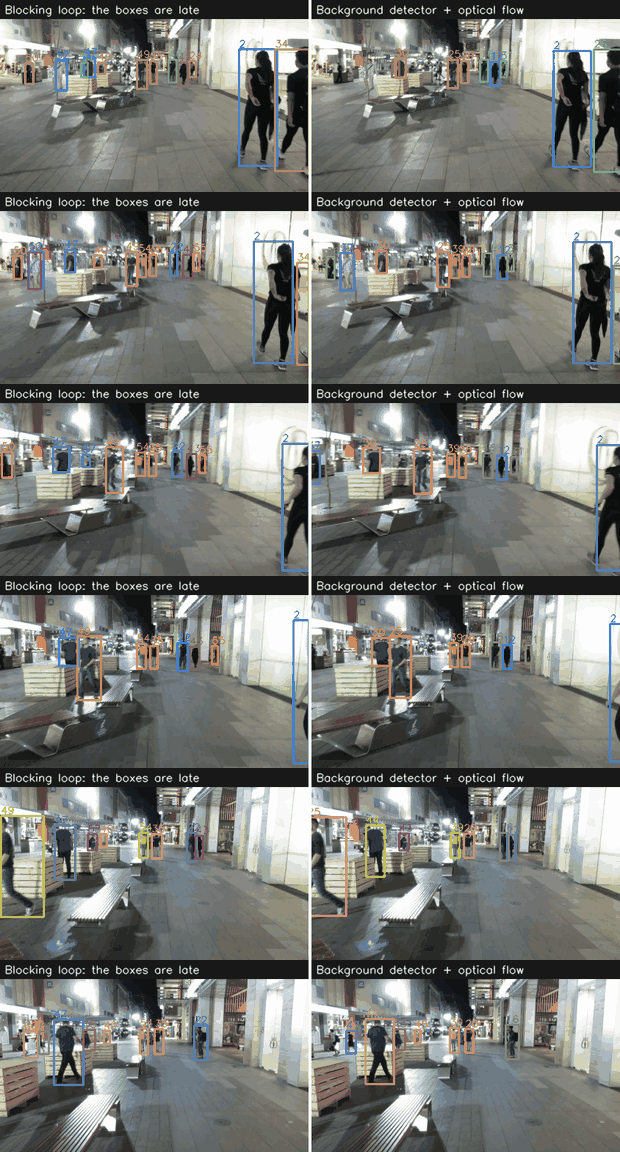
A multi-object tracking runtime that treats the detector as a limited resource. It decides when the detector runs, keeps each track correct between runs, and measures the accuracy cost of each decision.
On a live stream, a background detector with optical flow cut mean output latency from 101 ms to 5 ms and raised tracking accuracy (HOTA) from 32.9 to 34.5, on MOT17 with a laptop CPU.
Hybrid Retrieval Engine
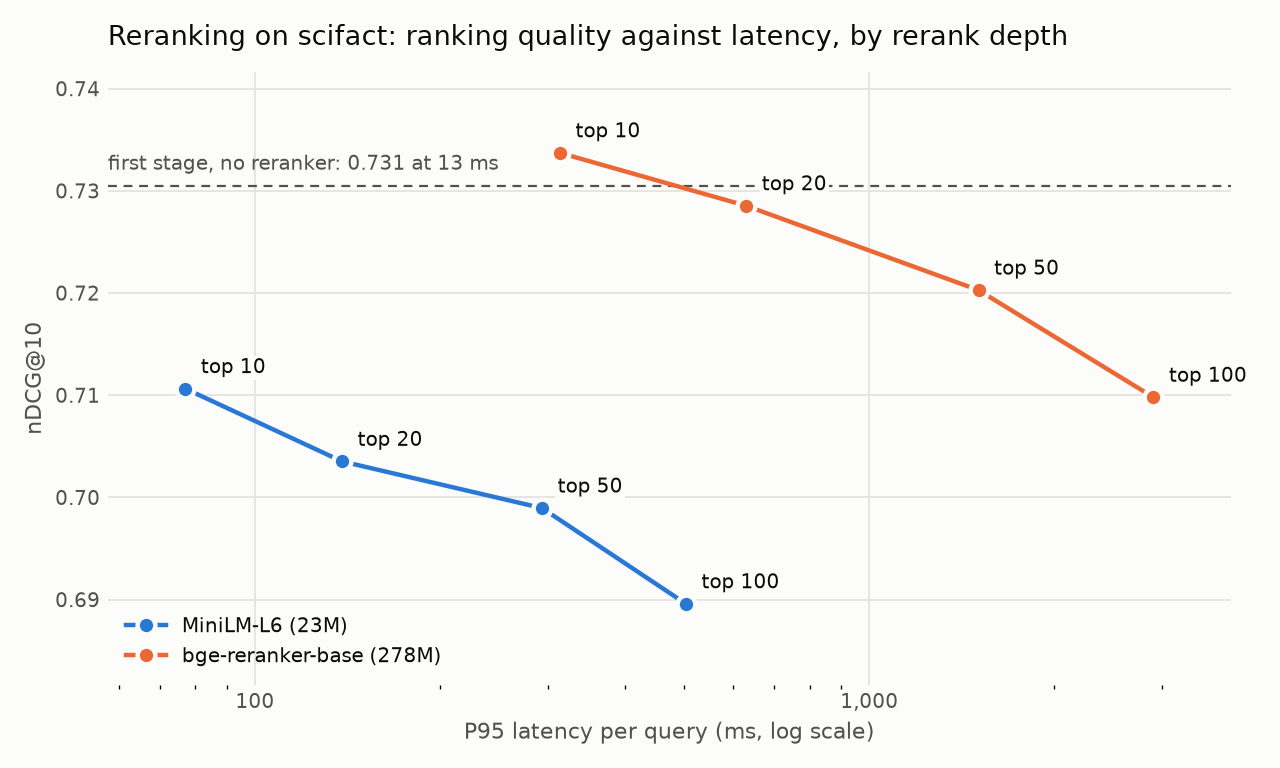
A search engine built in stages (BM25, dense retrieval, fusion, reranking, pruning), with benchmarks of what each stage adds in quality and costs in latency.
Rank fusion did not beat dense retrieval on either dataset, and neither reranker was worth its cost. MaxScore pruning returned the same results up to 9.6 times faster.
Drone Coverage Planner
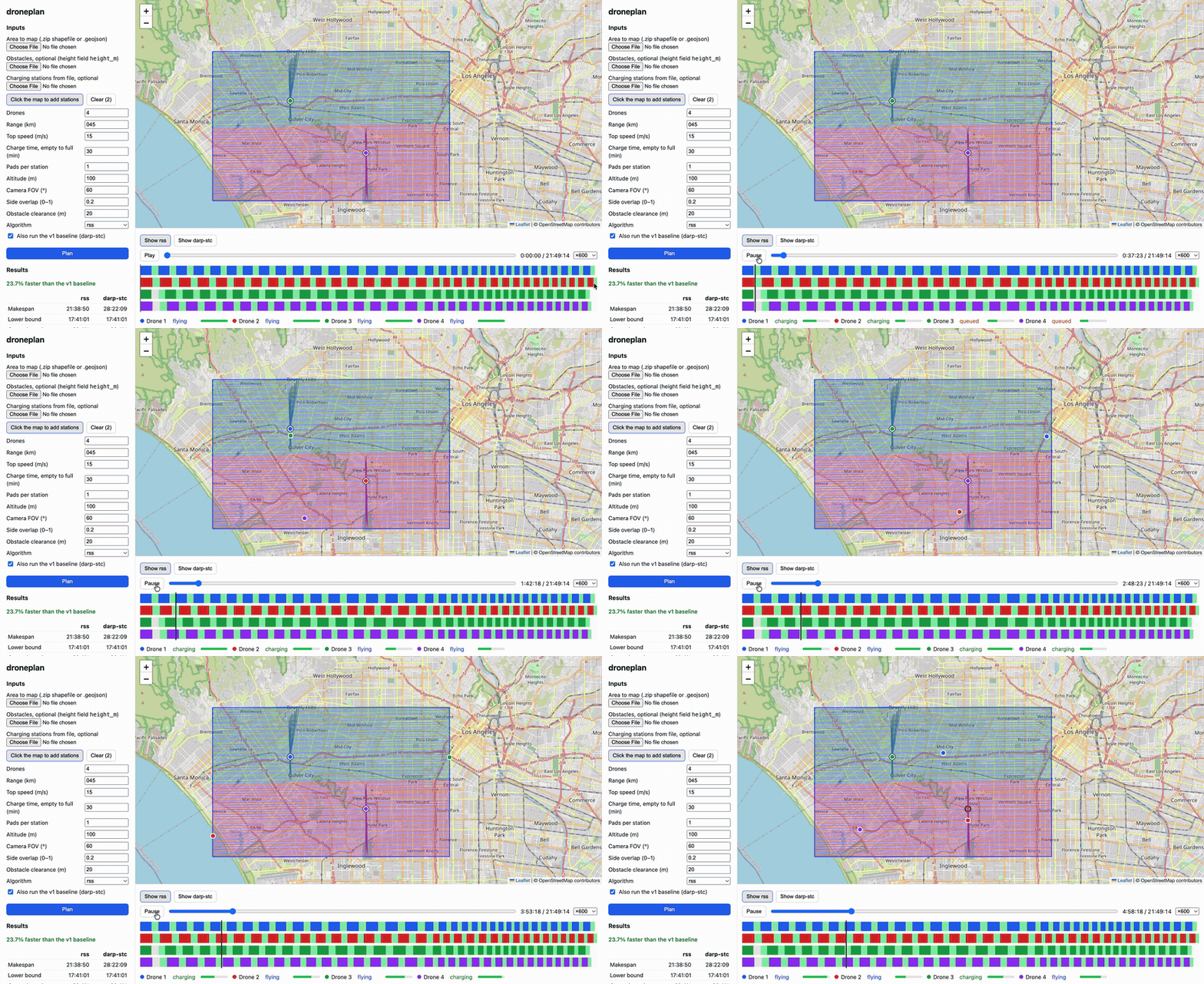
Plans routes and charging schedules for a fleet of battery-limited drones that map an area around obstacles.
Plans finish about 41% sooner than the DARP + STC approach it replaces, on 60 seeded instances, and an independent validator checks every plan.
Blog
Research
Education
-
University of Southern California
-
University of Mumbai
Contact
The best way to reach me is yashbitla1999@gmail.com. I'm also on GitHub and LinkedIn.